Thirteen months ago Renee and I sat through an entire afternoon on a metal bench at a road game, and about an hour in she quit talking about the game and started talking about her back. Not an injury. Just the ordinary tiredness of four hours on aluminum with nothing between her and it. On the drive home she asked me to look up whether anybody makes a seat you can carry through the gate that has a back on it. That is how two Everlasting Comfort stadium seats ended up living on the second row of the Tahoe.
I am not a gear guy with a channel. I am 61, retired four years now from the parts manager job at a truck dealership in Baton Rouge, and Renee and I drive to six to eight pro road games a season. About two a season we fly. Everything in this piece we bought with our own money, and nothing here was a sample. So this is not a listing read back to you. It is thirteen months, two seats, seven games where the stadium's own website said a seat with a back was allowed, and two of our grandson's high school games on bleachers.
The Quick Verdict
Thirteen months on hard benches and the foam has not gone flat. Buy it only after you read your stadium's own rules, because plenty of pro buildings will not let a seat with a back through the gate.
Amazon Check Today's Price →The seat we carry on the days the stadium says yes
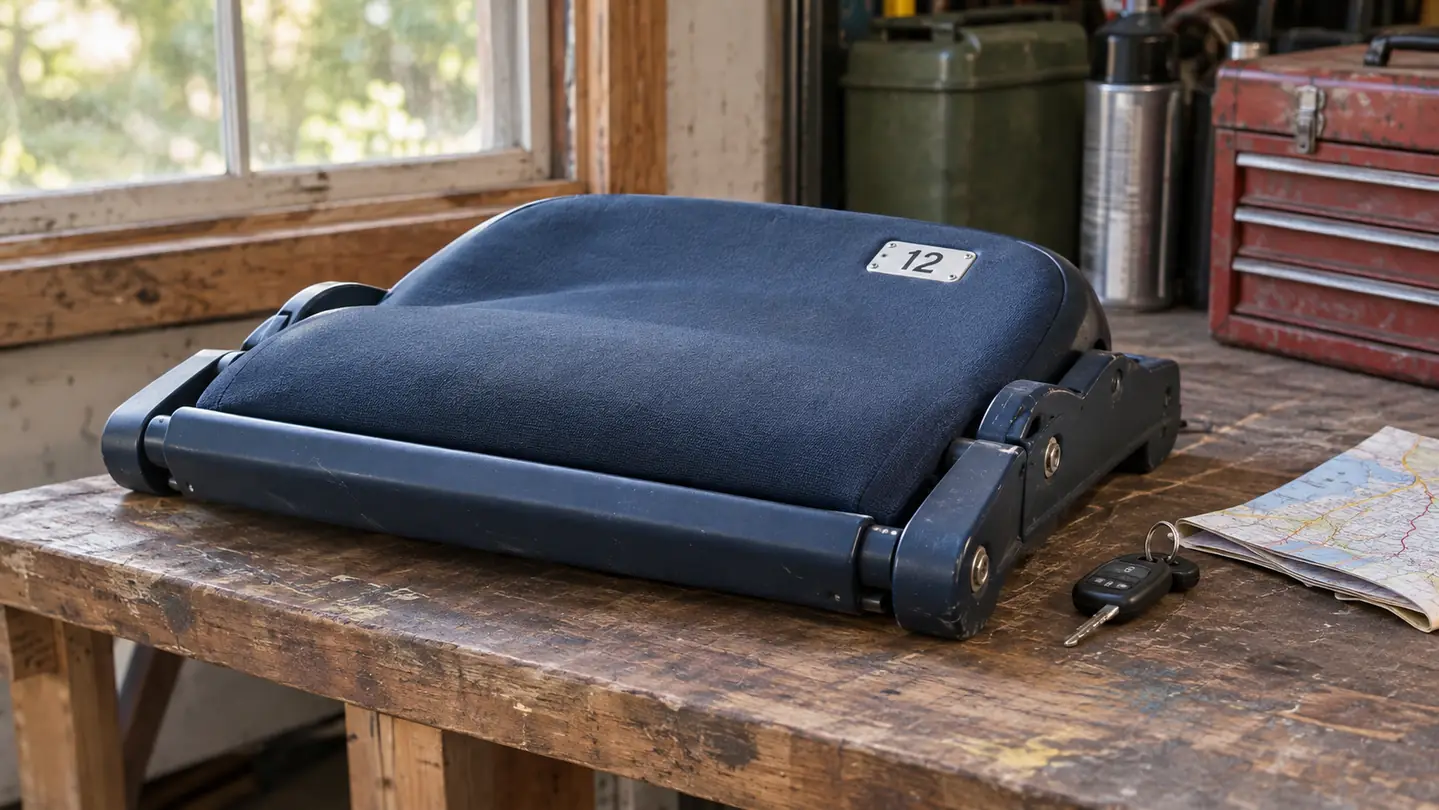
Folds flat, 2.2 lbs, about 17 inches wide, memory foam fill with an adjustable backrest. Read your building's rules first, then order two and stop thinking about the bench.
Amazon Check Today's Price on Amazon →How I've Used It
We bought two, thirteen months ago, one for each of us. Renee is the reason they exist. After that afternoon on the metal bench she said she was done sitting on a slab for four hours, and I was not going to argue with her about it. They live on one shelf in the hall closet with the cooler and the clear bag between trips, and they come out for a game only after I have pulled up that stadium's website and read what they allow through the gate.
That last part is the whole ballgame and I want to be plain about it. Many pro stadiums do not allow a seat with a back, the rules are not the same from one building to the next, and they change from season to season. If a back is not allowed, the seats stay locked in the Tahoe and we sit on whatever the stadium gives us. I have never had one taken at a gate because I have never tried to walk one in where it was not permitted. Check the stadium's own site before you leave the house. Not a blog, not a forum post from three years ago. Their site.
Where it was allowed, we used them at seven games. Two more outings were our grandson's high school games, on bleachers, where nobody was checking anything at the gate. So call it nine uses in thirteen months. The seats have held up. The memory foam has not gone flat, the cover still wipes clean with a damp cloth, and the adjustable backrest still holds where I set it.
The high school bleachers were the surprise. Those are aluminum, they are narrower than a pro bench, and there is usually no rail behind you at all. The seats were more useful there than at the pro games, honestly, and the width mattered less because those rows run deeper. Two games, two seats, and we were the only ones in our section not shifting around by the third quarter.
What You Are Actually Carrying In
The numbers matter here, because you are carrying this thing across a parking lot and up a concourse. The Everlasting Comfort seat weighs 2.2 pounds. It measures about 17 inches wide, 10.5 inches deep and 13 inches tall when it is standing up, and it folds flat for the walk in. There is a built in carrying strap, which is the difference between carrying it in one hand and hugging it against your chest like a fool.
The fill is memory foam, the cover is polyester, and the care instruction on the listing is wipe clean. I have wiped ours down after every game with a damp rag and that has been enough. I would not put the cover in a washing machine. The listing does not tell you to and I am not going to be the fella who finds out.
The backrest is adjustable. I set mine once at the start of a game and left it alone. Renee moves hers more than I do, depending on whether she is leaning back to watch or sitting up to talk to the people in front of us. The storage pocket is real and it holds a phone or a program once you are in your row, though at a gate it stays empty, because the guard wants to look inside it and you are holding up the line while he does.
Two seats, thirteen months, nine outings. The foam has not gone flat, nothing has torn, and the cover still wipes clean. That is the whole report.
A Game Day, Start to Finish
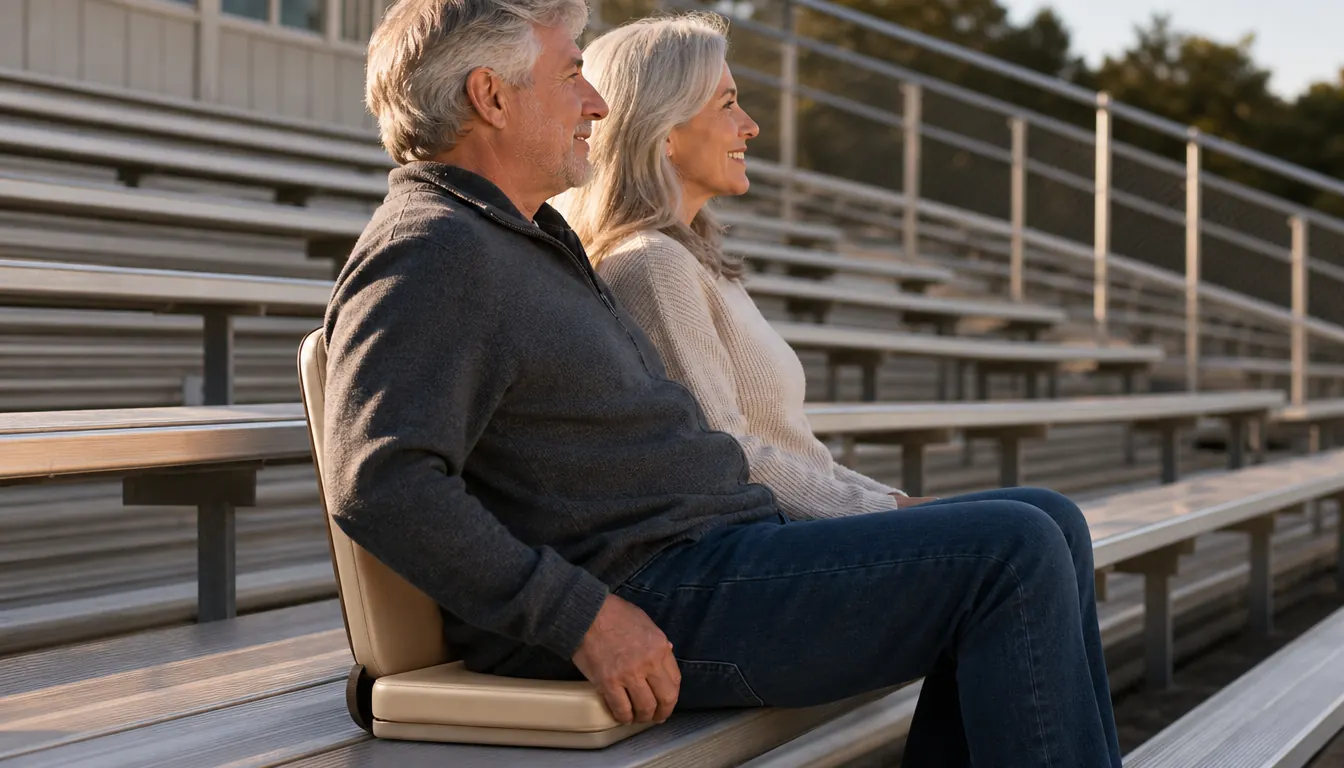
Here is what a game with these looks like. We park, and I open the second row of the Tahoe and pull both seats out by the strap. They fold flat, so they walk in next to my leg instead of swinging around and clipping somebody's knee. Through the gate they go flat on the belt, then we get to our row, unfold them, set them on the bench and sit down. Ten seconds each, maybe.
The difference over a four hour afternoon is not dramatic and I am not going to pretend it is. You are not sitting in a recliner. What you get is an inch or so of foam between you and metal, and a back to lean against instead of a rail behind your shoulder blades. The first game we used them, Renee and I both stood up at the end and walked out normally. The season before, we were both stiff by the fourth quarter and it took half the walk back to the Tahoe to loosen up.
Halftime is where a backrest pays off, in my book. You stand, stretch, walk down for something to drink, come back, and the seat is still where you left it with your jacket on it. Then you sit back down and you are not starting over from bare metal. Small thing. Over four hours it stops being a small thing.
The backrest is the reason we bought these instead of another flat pad. On a tight row, leaning back against nothing gets old fast, and on a bench with a rail behind it you end up hunched forward for hours. Having something to lean into changes how the afternoon feels. Lean back, watch the game, sit up when something happens. That is the entire feature list as far as I am concerned.
The Width Problem Nobody Mentions
Seventeen inches is wider than the spot the bench gives you. That is the trade, and you should know it before you order. On a tight row, a seat with a back takes up bench that the person next to you also paid for. The first time we used them I was conscious of it the whole game. Nobody said anything, but I was aware of the space I was taking.
We have learned to read the row before we sit down. If it is packed shoulder to shoulder, Renee takes hers and I take the aisle side and we make it work. If it is a row of big fellas, sometimes we unfold one and leave the other folded under the seat. And on the tightest rows we have left both in the Tahoe on purpose, because a seat that starts an argument with the guy two spots down is worse than a hard bench.
One thing I would do before ordering is eyeball the bench. Seventeen inches per person is the number to keep in your head, and if your seats are the narrow kind where everybody's knees are touching, you will feel the difference. On a wider bench you forget the seat is under you, which is the highest praise I can give a piece of gear.
What I Liked
- 2.2 pounds and it folds flat, so it walks in on the strap in one hand
- Memory foam has held up. Thirteen months in and it has not gone flat
- Adjustable backrest, which is the real difference between this and a flat pad
- Cover wipes clean with a damp cloth after a game
- Storage pocket holds a phone or a program once you are past the gate
Where It Falls Short
- About 17 inches wide, which is more bench than a tight row wants to give you
- Many pro stadiums do not allow a seat with a back, so check first or leave it home
- One more thing to carry across the lot on a hot day
- The storage pocket has to be empty at the gate anyway
Where It Falls Short
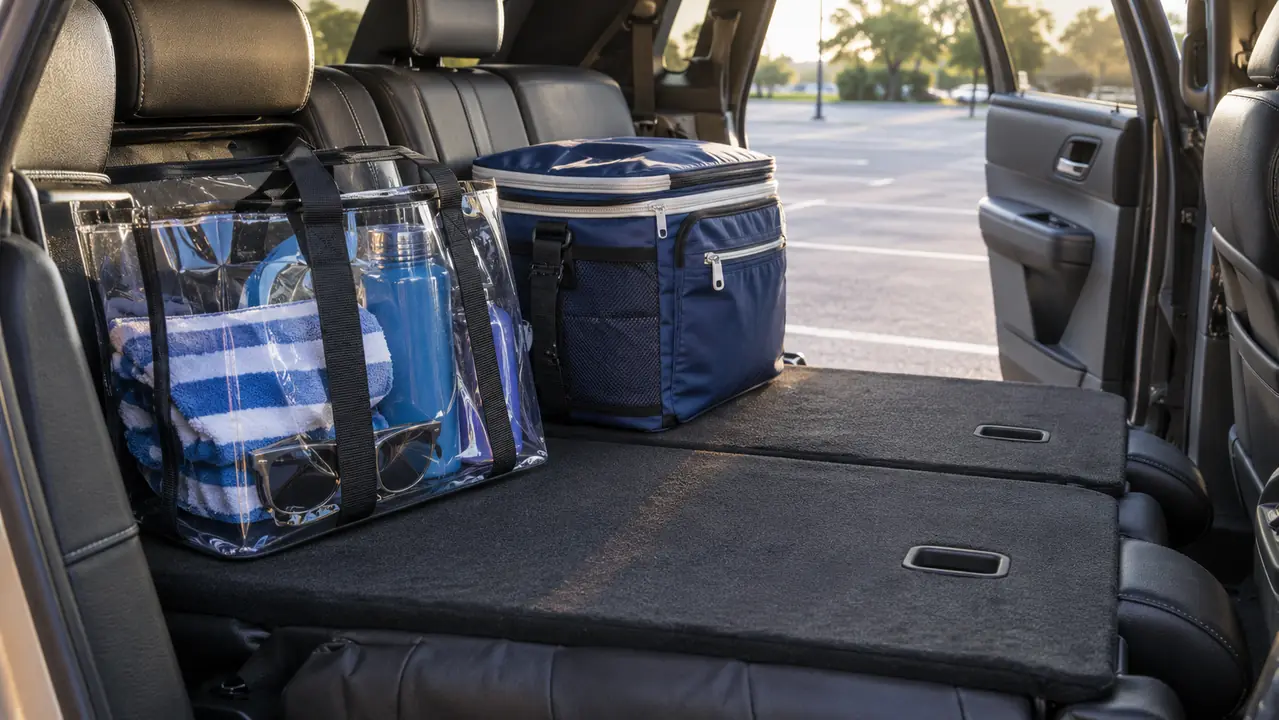
Beyond the width, the main drawback is that it is one more thing. We already carry a clear bag for the gate. Adding a seat means one more object per person on the walk in, and on a hot afternoon in a big lot that adds up. It is not heavy. It is just one more thing, and on the days when the stadium has not cleared a back, it is a thing we carried for nothing.
Second, the gate rules. This is not a flaw in the seat, it is a fact of the sport, and it is the thing that decides whether you get your money's worth. I have talked to people who bought a seat with a back and used it twice because their building does not permit one. Look it up in the what you can bring in section of the stadium's own website before you buy. If it says no seats with backs, buy a flat cushion instead and save yourself the walk back to the truck.
Third, the storage pocket. It is useful once you are sitting down, but at the gate it has to be empty because the guard needs to see inside it. So it is not a place to stash your phone on the way in. Renee keeps hers in the clear bag until we reach our row, then moves it over.
The Flat Cushion Question
We owned two flat foam cushions for about two seasons before these, and we still keep them in the hall closet. They are the answer for stadiums that will not allow a back. They weigh less, they take up less bench, and nobody at a gate has ever looked twice at one. If your building is strict, that is what you carry and you will be fine.
What a flat cushion does not give you is something to lean against, and after four hours that is the part that matters to us. So we use the seats where they are allowed and the flat cushions where they are not, and we never bring both on the same day. Bringing both is how you end up carrying one of them around for no reason.
Who This Is For
This is for somebody who sits through long games on hard benches and whose stadium, by its own published rules, allows a seat with a back. It is for couples like us, where one person is done with the metal and the other one is not going to argue about it. It is for people who drive to games and have room on the second row for two folded seats. If that describes you, these are the Everlasting Comfort seats we bought, and we would buy them again.
One plain note. If you have real back pain, this is a cushion, not a treatment, and you should talk to your doctor about the pain itself. What we have is the ordinary tiredness of a long afternoon, and the seat helps with that because it is softer than a bench and it gives you something to lean on.
Who Should Skip It
Skip it if your stadium does not allow seats with backs. That alone settles it, and no review should talk you out of the rules your own building publishes. Skip it if you are in a packed row with no room to spare, because 17 inches of width is a real cost to your neighbor. Skip it if you fly to most games. It folds flat and it is only 2.2 pounds, but it is still a thing in your luggage, and we leave ours home on plane trips.
And skip it if you want a seat that does something clever. This one does not. It puts foam between you and metal and gives you a back to lean on, and that is the whole idea. If four hours on a hard bench does not bother you, you do not need to spend anything, and I mean that.
Check your building's rules, then order two
Thirteen months, two seats, nine outings, foam still holding. Confirm a back is allowed at your stadium before you buy, and the rest is easy.
Amazon Check Today's Price on Amazon →