Three hours into the drive to an away game, Renee asks where the sandwiches are. Same question every trip. Same answer since the fall of 2022. They are in the Lifewit bag in the back, and yes, the ice packs are still hard as a brick.
I am Wade Thibodeaux. I spent most of my working life as a parts manager at a truck dealership here in Baton Rouge, and I retired four years ago. Renee and I drive to six or eight pro road games a season and fly to about two. The Lifewit collapsible cooler bag is the oldest piece of gear we carry. We bought it 38 months ago to replace a white hard cooler that had been in the family for years. It has been on close to 20 road trips, it rides behind the second row of a 2019 Tahoe, and it has never once gone through a stadium gate. It is not supposed to.
The Quick Verdict
A 30 liter soft bag that carries a full day of food and drink for two people and holds cold from an early start through a parking lot tailgate. Not as tough as a hard cooler, slumps when it is half full, and you cannot sit on it.
Amazon Check Today's Price →The bag that has ridden behind the second row of my Tahoe for 38 months
We bought it to get a heavy hard cooler out of our lives. It holds a full day of food and drink for two, wipes clean with a damp cloth, and folds down onto a closet shelf between trips.
Amazon Check Today's Price on Amazon →How I've Used It
The bag lives on a shelf in the hall closet between trips. The night before we leave I pull it down and pack it. Frozen water bottles across the bottom, then the ice packs, then the food. Sandwiches in paper, fruit, a couple of soft drinks, water. It sits by the back door overnight so I do not forget it. In the morning it goes in the Tahoe behind the second row and it does not move again until we park.
At the stadium it stays in the truck. That is not a rule I read on a forum, it is just what makes sense for us. Every stadium publishes its own bag policy and no two of them read the same, so I check the stadium's own website before we leave the house. A soft bag that measures 15.7 by 10.6 by 12.2 inches is not something I am going to argue about at a gate. It stays locked in the Tahoe, we walk in with the clear bag, and we eat in the parking lot before and after.
20 road trips in 38 months. Nothing has torn. The shoulder strap is the strap that came with it. The liner has been wiped out with a damp cloth maybe a dozen times and it still does not smell like old milk, which is more than I can say for the hard cooler it replaced. The listing shows a 4.6 average across 9,133 ratings, and after three seasons I understand why. The one maintenance habit I have is simple: the night we get home I empty it, wipe the liner down, and leave it open on the shelf overnight to dry. Do that and it stays a clean bag. Skip it for a week and you will know.
What 30 Liters Actually Holds
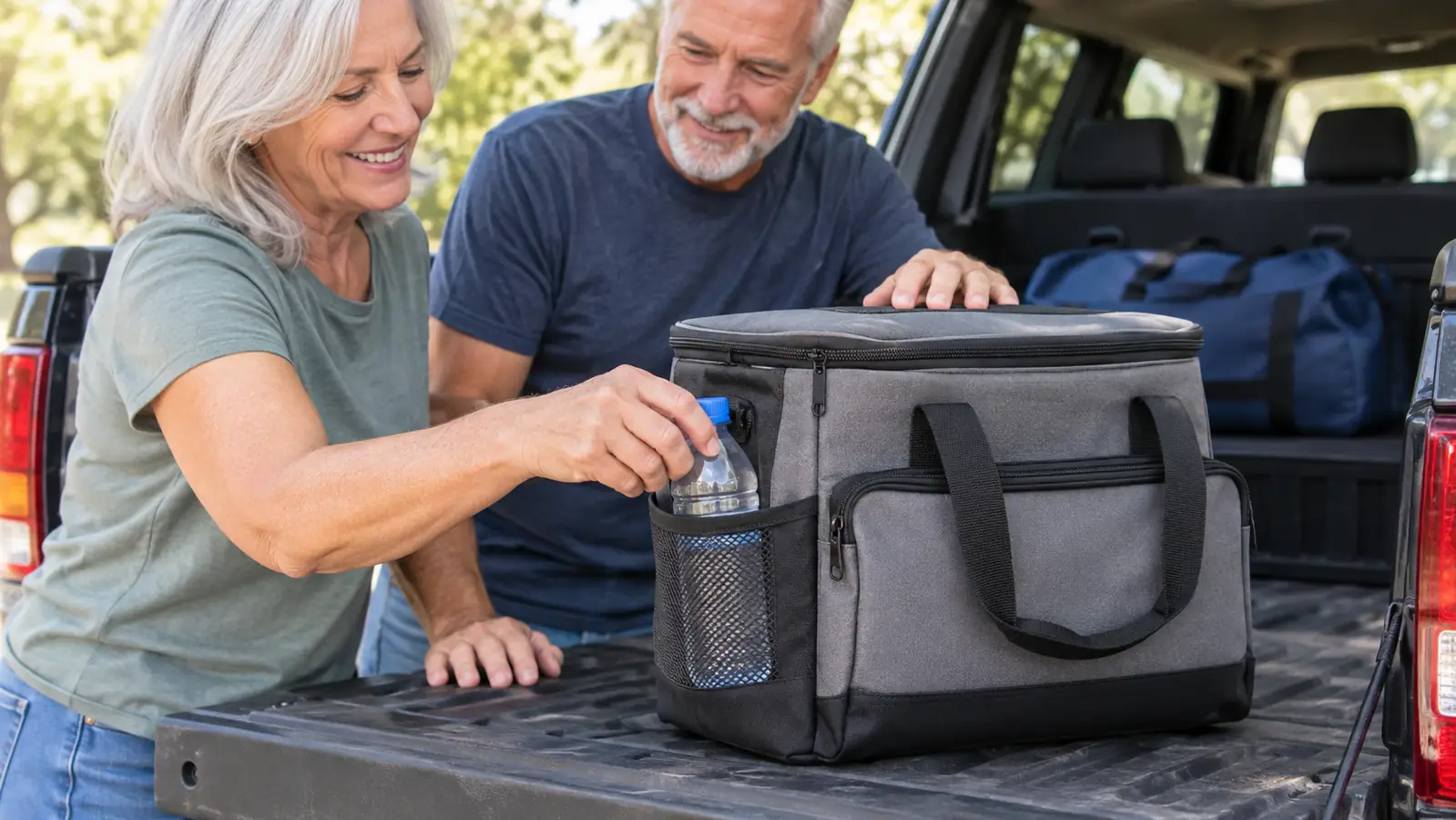
The listing calls it a 50 can bag and 30 liters. I have never counted cans, because we do not pack cans. What I can tell you is what actually fits. Lunch for two people for a day, four frozen water bottles, two ice packs, a bag of grapes, a couple of apples and four soft drinks, with enough room left on top to lay a folded rain poncho. That is a full day for us and we are not shy eaters on a game day.
The two side mesh pockets get more use than I expected. One holds a bottle of water upright where Renee can reach it at a fuel stop. The other holds an umbrella. I did not think I would care about pockets on a cooler bag. I use both of them every single trip. There is also a shoulder strap in the box alongside the bag, and I have never taken it off.
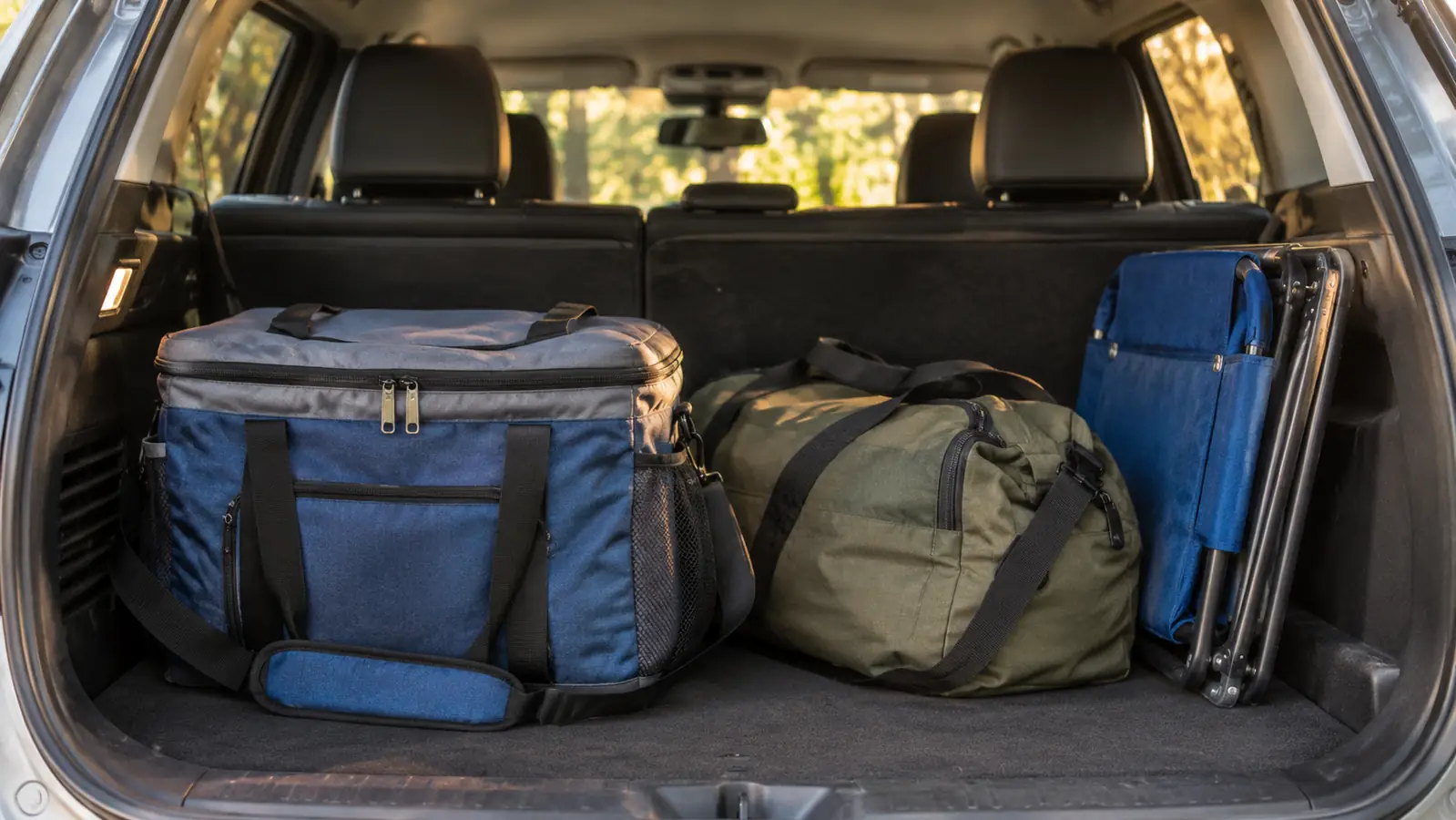
The Lifewit measures 15.7 inches deep by 10.6 wide by 12.2 tall. Behind the second row of the Tahoe that leaves room for a duffel and the stadium seats. Empty and folded down it takes about as much shelf space as a folded duffel bag. That matters more than I thought it would. The hard cooler lived in the garage because it was too big to store anywhere else, and a cooler that lives in the garage is a cooler you forget. On our shelf it sits between a clear tote and a pillow, and I can put one hand on it in the dark.
Packing it the night before is the part I would not give up. The frozen bottles do the heavy work overnight, the food goes in cold instead of room temperature, and by morning the whole bag is at temperature before we ever turn the key. If you pack it warm at 6 a.m. and drive two hours, you are asking a lot of a soft bag.
The first season I got this wrong. I packed it the morning of, straight out of the refrigerator, with one ice pack and a bag of ice from the gas station. By the time we parked, the ice was water and the sandwiches were cool at best. Nothing spoiled and nobody got sick, but it was a mediocre tailgate. What fixed it was not the bag. It was loading frozen bottles the night before and doubling up on ice packs. Same bag, better result.
How It Holds Cold Through a Parking Lot Tailgate
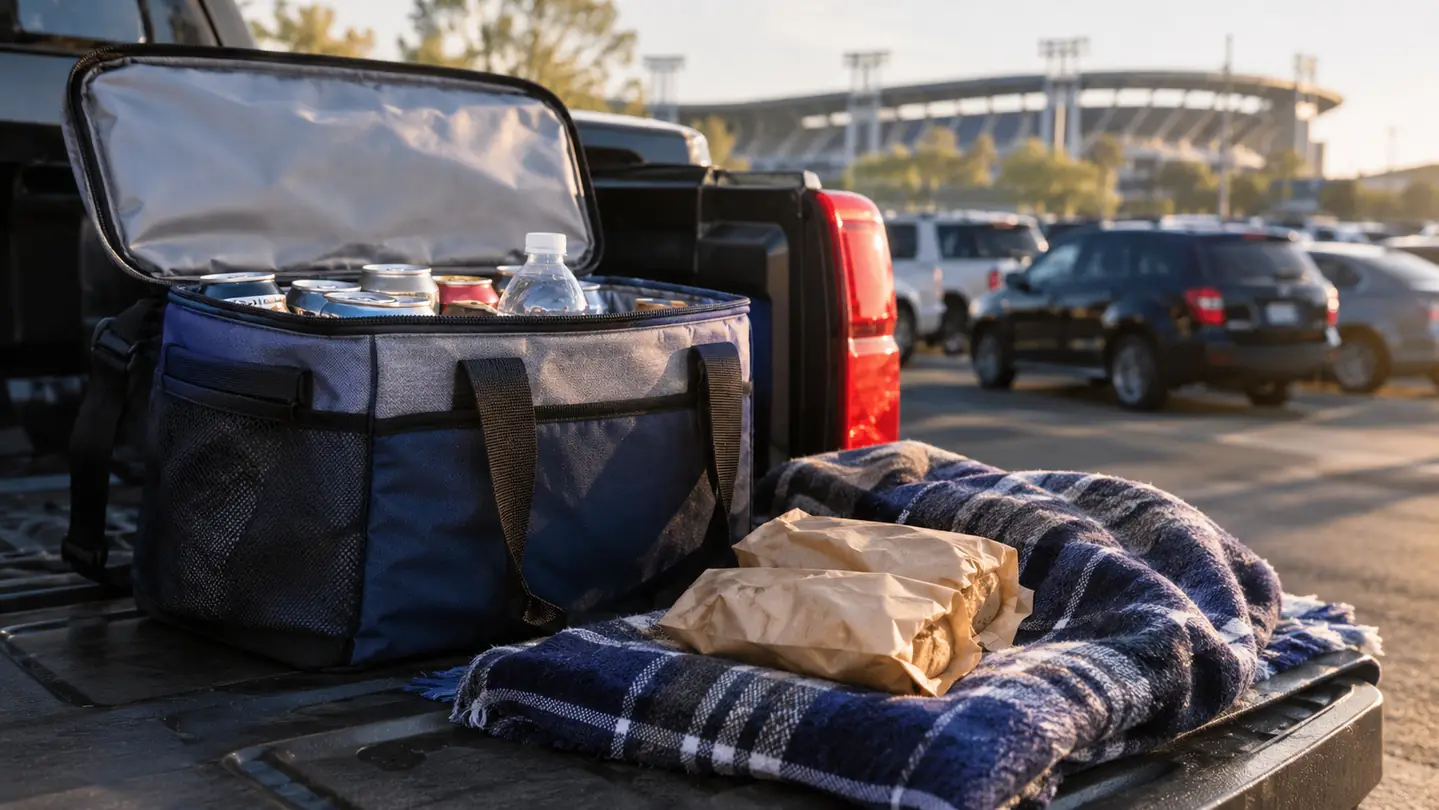
I am not going to hand you a number of hours, because anyone who does is guessing about your truck, your ice and your weather. What I will give you is the pattern from 20 trips. Packed the night before. Leave early. Park two or three hours before kickoff. Eat in the parking lot. Walk back after the game and the food is still cold and there is still ice rattling in the bottles. That is a long day, start to finish, and it has held every time.
One honest complaint. It sweats. On a hot September morning in Louisiana, sitting in a parking lot in the sun, the outside of the bag will condensate. Set it on a towel or on the tailgate mat instead of a seat cushion and it is not an issue. The liner itself has never leaked on me. The outside gets wet, the inside stays where it belongs. I keep a folded towel under the passenger seat for exactly this, and it costs nothing.
The construction is 600D Oxford cloth outside, a PEVA liner, and polyethylene insulation. I sold truck parts for a living and I know what that adds up to in practice. It is a fabric bag with a plastic liner and foam in the walls. It is not a heavy molded box with a rubber gasket. Treat it like fabric and it will last.
We did have one October game where it sat in full sun for four hours before we went in. The soft drinks were still cold at the end. The ice packs had gone to water, which is what ice packs do. Nothing spoiled. I would not push it further than that and expect the same answer. If the forecast says ninety degrees and no shade in that lot, I add a second round of frozen bottles and park where the truck throws a shadow.
Carrying It From the Truck to the Table
The shoulder strap is the reason this replaced a hard cooler. I can carry a full bag from the back of the Tahoe to a picnic table fifty yards away in one trip, with a folding chair in the other hand. With the hard cooler that was two hands and a rest halfway. Renee can carry it full. That was not true of the hard cooler. On the walk back after a game, when everybody is tired and the lot is emptying out, that difference shows up in a hurry.
Set down, it slumps. Half full it will lean against whatever is next to it. It is not furniture, it is a bag. I have never had food spill from it, but I have propped it against a wheel more than once on a windy day. My habit now is to set it against the tailgate instead of out in the open, so there is something for it to lean on.
What Wears On You After a Few Seasons
Three things I would tell a friend before he spends his money on one.
It slumps when it is half full. A hard cooler sits on the tailgate like it was built there. This one leans. You learn to pack it full or lean it against the spare tire and get on with your day. It is the one thing I notice most, usually on the second afternoon of a trip when half the food is already gone.
You cannot sit on it. That sounds like a joke until you have stood in a parking lot for three hours. The hard cooler was a seat for two of us. This is not a seat for anybody, not for a minute. The folding chairs live in the Tahoe anyway, so we sit in those instead, but the first season I missed that lid more than I expected.
It is not as tough. Nothing has torn in 38 months, but I also do not throw it. If you are the sort who drops a cooler off a tailgate onto asphalt, buy a hard one. This is a soft bag and it behaves like one. The outside has scuffed a little from sliding in and out of the cargo area, the same way a duffel scuffs. It has not worn through anywhere.
What I Liked
- Holds a full day of food and drink for two people in 30 liters
- Keeps food cold from an early start through a parking lot tailgate and back
- Folds down to about the size of a duffel for closet storage
- Two mesh side pockets hold a water bottle and an umbrella
- Light enough for two people in their sixties to lift in and out of a truck
Where It Falls Short
- Slumps when it is half empty and will not stand on its own
- You cannot sit on it
- It sweats on the outside in heat and humidity
- Not as tough as a hard cooler
- Stays in the vehicle. It is not a stadium bag
20 road trips and 38 months, and there is still ice rattling in the water bottles when we walk back to the truck after the game.
The Hard Cooler It Replaced
We owned a white hard cooler for years. It is still in the garage. It goes fishing about twice a year now, which is the right job for it, and it does that job well.
It was simply too much cooler for us. Heavy empty, heavier full, and awkward for two people in their sixties to lift in and out of the back of a Tahoe. Renee could not manage it full and I did not enjoy it either. It also took the same amount of room whether we had a full day of food in it or one bag of sandwiches.
The Lifewit fixed the weight and the space in one move. Same food, a fraction of the weight empty, and it disappears into the closet when we get home. What we gave up was toughness, a seat, and the ability to leave it sitting on the ground in the rain. For a game day bag that was the right trade for us. I wrote the longer version of that comparison out separately if you want it row by row.
Who This Is For
You drive to games. You eat in the parking lot before and after. You want a day's worth of food and drink for two people, you want to get it from the truck to a table without a hand truck, and you want it out of your way when you get home. That is the whole job, and the Lifewit does it.
It also works if you are the one feeding a small group. The listing says it is large enough for whole family picnic essentials, and that has held up the two times I packed for four. Everything fit and I still had room to spare. Renee's sister's family met us in the lot once, four extra people, and nobody went without.
If you are flying, leave it home. Ours stays on the closet shelf on flight weekends, because a soft bag that size is one more thing to haul and the airport food is not that bad.
Who Should Skip It
Skip it if you want to sit on your cooler. Skip it if it will live in a truck bed in the weather or get thrown around. Skip it if you need two days of cold instead of one and want to trust a lid you cannot see through. Those jobs want a hard cooler and there is no shame in that.
And skip it if you are shopping for something to carry through the gate. Many pro stadiums publish a bag limit around 12 by 6 by 12 inches. This bag is bigger than that in two of its three dimensions. Check the stadium's own website before you go, because the rules are not the same from one place to the next. The Lifewit stays locked in the Tahoe, and it is going to stay there.
38 months, 20 road trips, and the ice packs are still doing their job
If you are tired of wrestling a hard cooler in and out of a truck for one day of food, this is the swap that worked for us. Pack it the night before, put it behind the second row, and eat in the parking lot.
Amazon Check Today's Price on Amazon →