
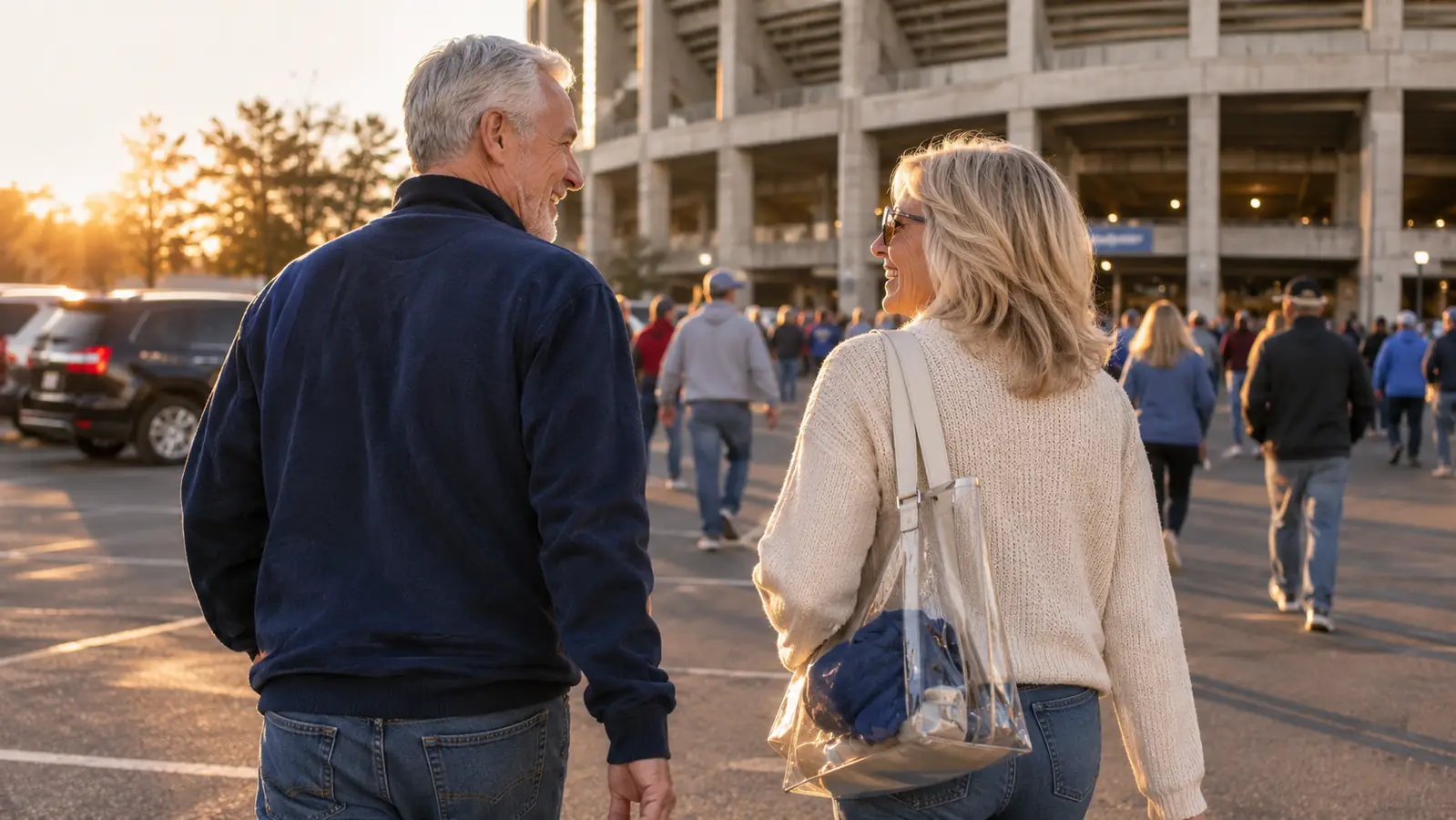
The handle tore about forty yards from the gate. Renee and I were on the walk in from the parking lot, and the giveaway tote she was carrying gave out at the seam. Everything went down on the asphalt. Phones, keys, wallet, a pack of tissues. Nothing broke and nothing was taken. But we spent the next ten minutes on our knees in a crowd of people, and then we carried the rest of it in our hands the whole afternoon.
That was twenty-seven months ago. On the drive home I got out my phone at a red light and read the stadium's bag rules again, the ones I should have read before we left the house. They were plain enough. Clear bag, and a size limit. So we ordered the BAGAIL clear tote, the 12 x 6 x 12 inch one, the week before the first road game of that season. Twenty-six months later it has been to about eighteen games and it is still the bag that goes to the gate.
I am not a gear guy. I spent thirty-one years as a parts manager at a truck dealership, so I know what a bad part looks like and I know what a part is actually for. This is a bag with one job.
What It Actually Holds
Renee carries it. That is just how it shook out. In it goes the power bank, both phones, a wallet, keys, a small pack of tissues and a rain poncho. The bag is 13.5 liters and weighs 7.84 ounces empty, which is light enough that she forgets it is on her shoulder until we get to the gate.
The strap adjusts, and she wears it crossbody coming in and switching to the shoulder once we are seated. The zipper is the part I care about. A clear bag without a closure is a clear bag that empties itself on the ramp. This one zips, and twenty-six months in, the zip still runs clean.
The strap adjusts, she wears it crossbody coming in, and the zipper still runs clean twenty-six months later.
It wipes clean. That matters more than it sounds. These bags get set down on concrete, on wet bleacher steps, on tailgate tables. A damp cloth takes the day off it in about thirty seconds. Ours has gone a little cloudy and it has scuffed along the bottom from being set down a few hundred times. It looks like a bag that has been used. It is not a bag I would carry anywhere but a game.
Here is the tradeoff nobody mentions. Everyone can see what is in it. That is the whole point of the rule, and it is also the whole point of the design. You do not get privacy and a fast gate line at the same time. Renee keeps her wallet at the bottom under the poncho for that reason, and she has never had an issue.
The other thing: PVC gets stiff on a cold day. A November morning in a parking lot, the bag has less give to it than it does in September. Not a problem. Just something you notice when you are trying to push a wallet in one-handed while holding a coffee.
The bag that has carried our phones, wallet and poncho through eighteen gates
Clear PVC, 12 x 6 x 12 inches, 13.5 liters, zipper closure and an adjustable shoulder strap. Check the size against your stadium's own rules before you go. Many pro stadiums publish 12 x 6 x 12, but not all of them do.
Amazon Check Today's Price on Amazon →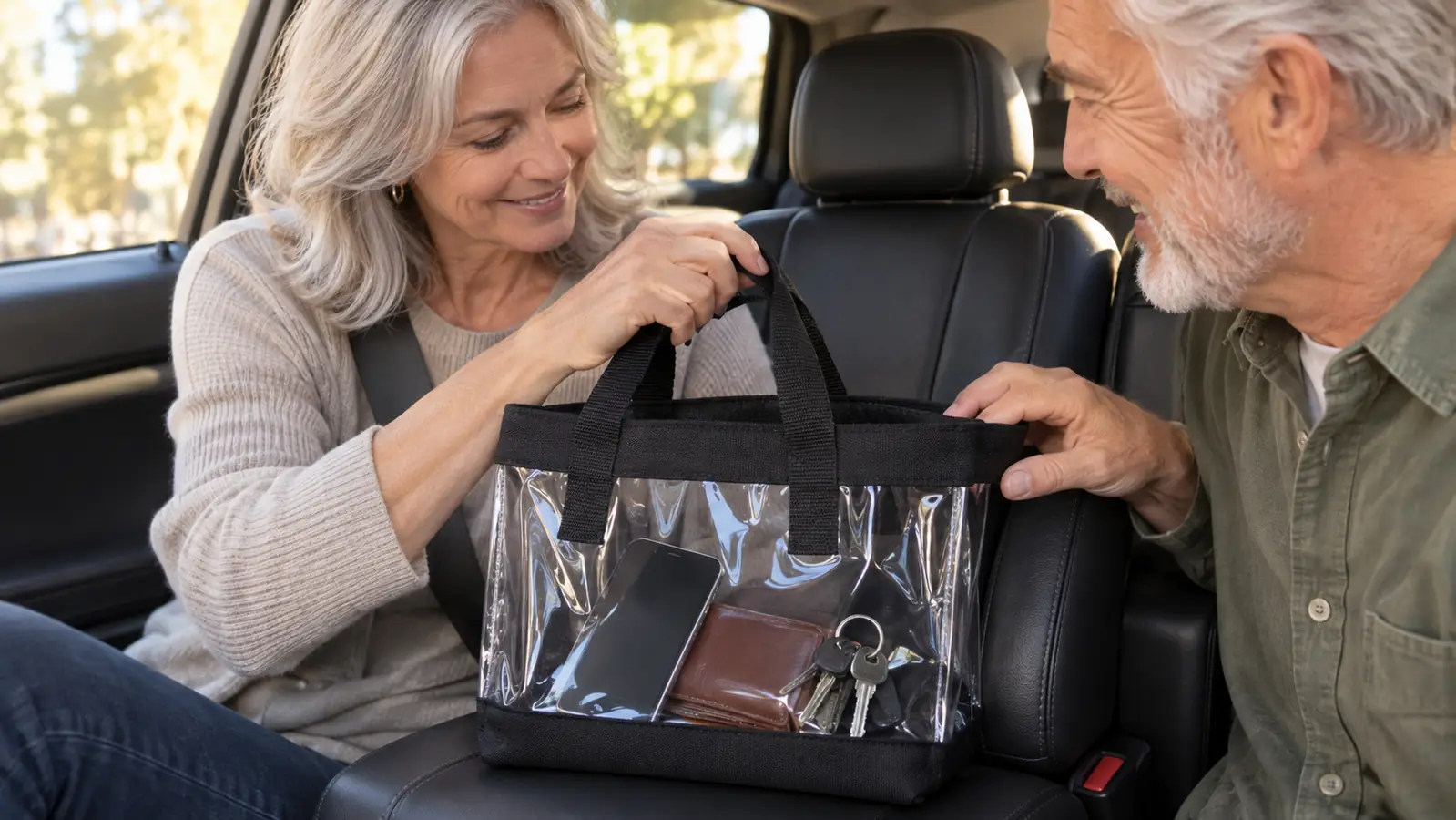
Why It Beats the Free Tote
I want to be fair to the hardware store. The tote was free and I got a season of use out of it. But it was a giveaway bag with a stitched handle and a thin panel, and the handle was the first thing to go. The BAGAIL has a nylon handle and a shoulder strap that goes across the body, so the load does not hang off one seam on one side.
People ask me why not just a cheap vinyl tote from a dollar shelf. You can, and it will probably survive a season, maybe two. What you are buying with the BAGAIL is the closure and the strap and a size that matches what a lot of stadiums publish. That is it. It is not complicated and I would not pretend it is.
Before every trip, I go to that stadium's website. Not a fan forum, not a blog, not a comment thread from three years ago. The stadium's own page, the week of the game. Rules differ from building to building and they change. I have seen a bag that passed one season get measured differently the next. Nothing about this bag guarantees you get through a gate. Reading the rules first is what gives you your best shot, and it is free.
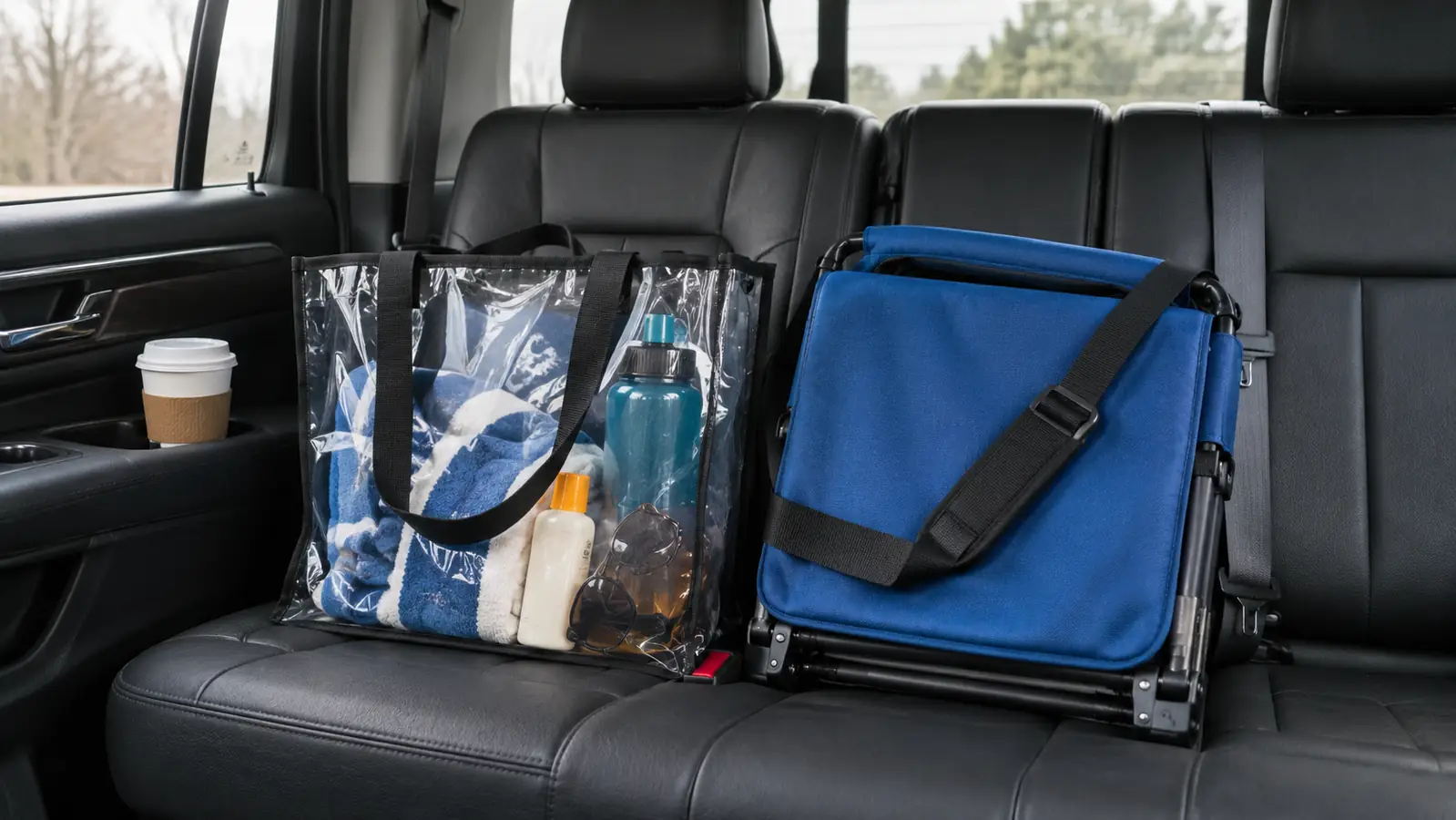
When we fly, the bag folds flat and goes in the carry-on. On the two plane trips a season, that is all it does. The cooler stays home and the seats stay home. The bag rides in the suitcase until we are standing in a terminal somewhere.
What I'd Tell You If We Were Sitting at My Kitchen Table
I would tell you the bag was never the interesting part. The interesting part was the ten minutes on my knees in the parking lot, and the fact that I could have avoided it by spending five minutes on a website before we left the house. That is the whole lesson and it is not really about a bag.
I would tell you to read your stadium's rules the week of the game, every time, and to check the size against a tape measure instead of against the listing photo. I would tell you that a clear bag means people can see your wallet, so put it somewhere other than the top. I would tell you to wipe the thing down when you get home instead of waiting until it is cloudy and stiff, because it takes half a minute when it is fresh and a lot longer when it is not.
And I would tell you that after about eighteen games, ours has not torn, has not been taken at a gate, and has not been replaced. That is not a dramatic endorsement. It is the kind of thing I would actually say to a neighbor. The bag does its one job, it costs less than a parking spot, and I have not thought about it in months, which is the highest compliment I can pay a piece of gear.
One clear bag, twenty-six months, eighteen games, no more kneeling in the parking lot
12 x 6 x 12 inches, 13.5 liters, 7.84 ounces, PVC with a zipper closure and an adjustable shoulder strap. Wipes clean with a damp cloth. Verify the size against your stadium's published rules before you leave home.
Amazon Check Today's Price on Amazon →