The first twenty minutes of any road trip are easy. Every cooler bag works then. The trouble shows up later, when the ice has turned to water, the sandwiches have gone soft, and the person in the passenger seat reaches into the back to ask whether the drinks are still cold. I have opened that bag. I have poured that water out in a parking lot before kickoff.
I'm Wade Thibodeaux. I'm 61, four years retired from a parts manager job at a truck dealership, and Renee and I drive to six or eight pro road games a season out of Baton Rouge. Two more a season we fly, and the cooler stays home for those. The bag in the back of the Tahoe is a Lifewit collapsible cooler bag, the 50-can size, 30 liters, and it has been riding there for 38 months. Here is what I learned slowly: the bag is maybe a third of the job. The other two thirds are what you put inside it and how often you open the top.
The bag that has ridden behind the second row for three seasons
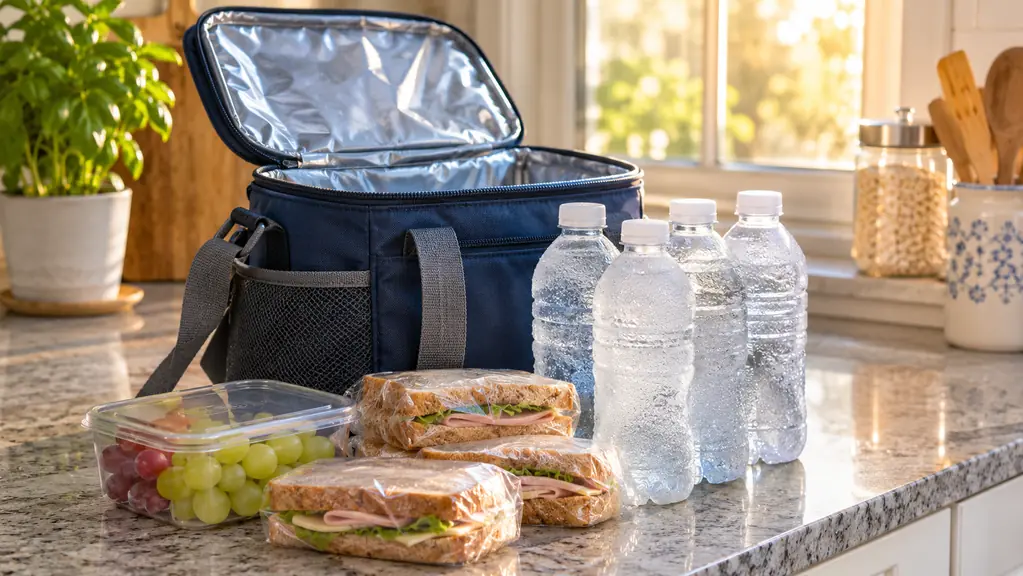
The Lifewit collapsible cooler bag holds 30 liters, or 50 cans. 600D Oxford cloth outside, PEVA liner inside, two side mesh pockets, a shoulder strap, and it folds flat onto a closet shelf between trips.
Amazon Check Today's Price on Amazon →Step 1: Chill the bag before you put anything cold in it
A cooler bag does not make cold. It slows the loss of cold you already paid for. So the night before a trip I put two frozen water bottles in the empty bag and leave it inside the house, not out in the garage. The garage here in Baton Rouge runs hotter than the kitchen from May through September, and a bag that sits out there overnight starts the morning already behind before you have packed a single thing.
The Lifewit is soft sided. The outside is 600D Oxford cloth, the liner is PEVA, and neither one is a refrigerator wall. That is fine. It holds what you give it. But if the bag has been sitting on a closet shelf since the last trip, you are asking a thin wall to do work it was never built to do. Twenty minutes with two frozen bottles in it costs you nothing and gets the liner down close to cold before the real packing starts.
I learned that the slow way. On an early trip I packed the bag straight out of the closet, warm liner and all, with a bag of ice cubes in the bottom. By the time we reached the parking lot the cubes were half water and the sandwiches on top had gone soft. The next trip I chilled the bag first, and the same amount of ice came out of it still solid. Wiping the liner dry before it goes back on the shelf matters just as much. A bag put away damp comes out smelling like a bait shop, and then you spend the whole next trip pretending not to notice.
Step 2: Use frozen water bottles instead of loose ice
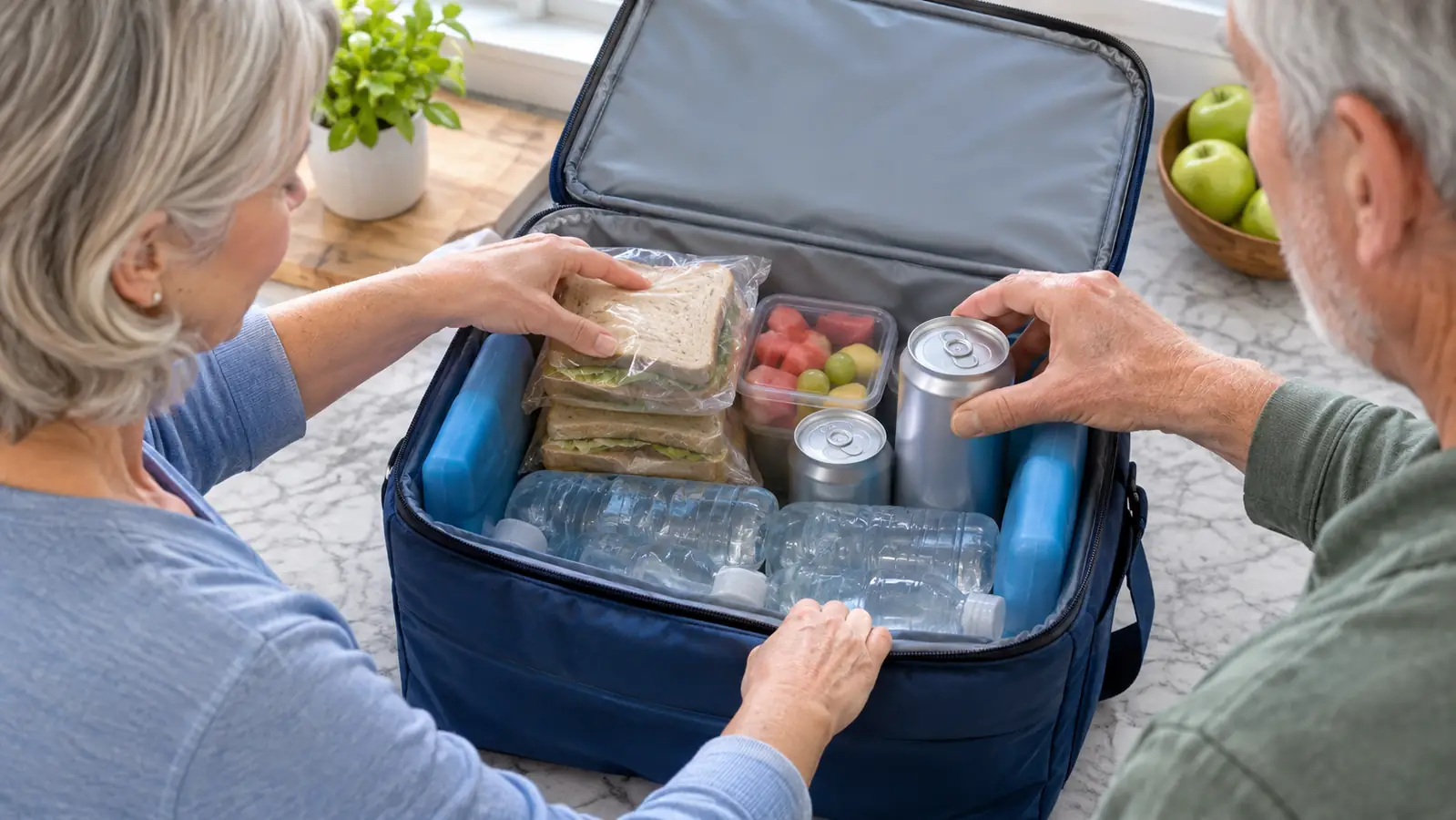
Loose ice is a mess in a soft bag. It melts, the water finds the low corner, and by the time you reach the parking lot you are carrying something heavier and wetter than it was when you left home. I quit using cubes years ago. Frozen bottles and two ice packs do the same work and they do not turn the bottom of the bag into a puddle you have to deal with at the tailgate.
The bottles come back as drinking water later in the day, which matters when you are standing in a parking lot in September. I fill five or six partway, leaving room for the water to expand, lay them down in the bottom of the bag while they are still frozen solid, and let the ice packs fill the gaps along the sides. Partway matters. A bottle filled to the cap splits at the seam when it freezes, and then you have a bag of water and a story about a bottle.
I am not going to give you a number of hours this bag stays cold. I have not measured it and I do not trust the stickers on any cooler bag. What I will tell you is that it holds cold for the drive and through a tailgate on a hot day when I pack it the way I describe in the next step. After 38 months and about twenty road trips, it is still the bag that comes off the shelf. That is the only measurement I have and it is the one I trust.
Step 3: Fill the empty space, because air is what eats your ice
Cold air sinks and empty space is where the warm air sits. So the coldest, densest things go in first. Frozen bottles laid flat on the bottom. Ice packs down both long sides. Then the food, then the drinks, then whatever else fits.
The bag is 30 liters, roughly 15.7 by 10.6 by 12.2 inches, and it swallows more than it looks like it will. For a two-person game day I pack four sandwiches, a container of fruit, a small tub of pimento cheese, six waters and a couple of soft drinks, and the bag is still not full. Out of the house that feels like a bonus. It is not. A half-full bag slumps, the contents slide to one end, and all that leftover air is the air that eats your cold. If I am light on food I add two more frozen bottles just to take up the room.
The two mesh pockets on the sides hold what you plan to drink first, which is the whole point of putting it outside the cold instead of digging for it. A bottle in the pocket is a bottle you do not have to open the bag to find. That one habit saves more cold over an afternoon than any ice pack I have bought.
Step 4: Put the bag where the truck is coolest, not where it fits
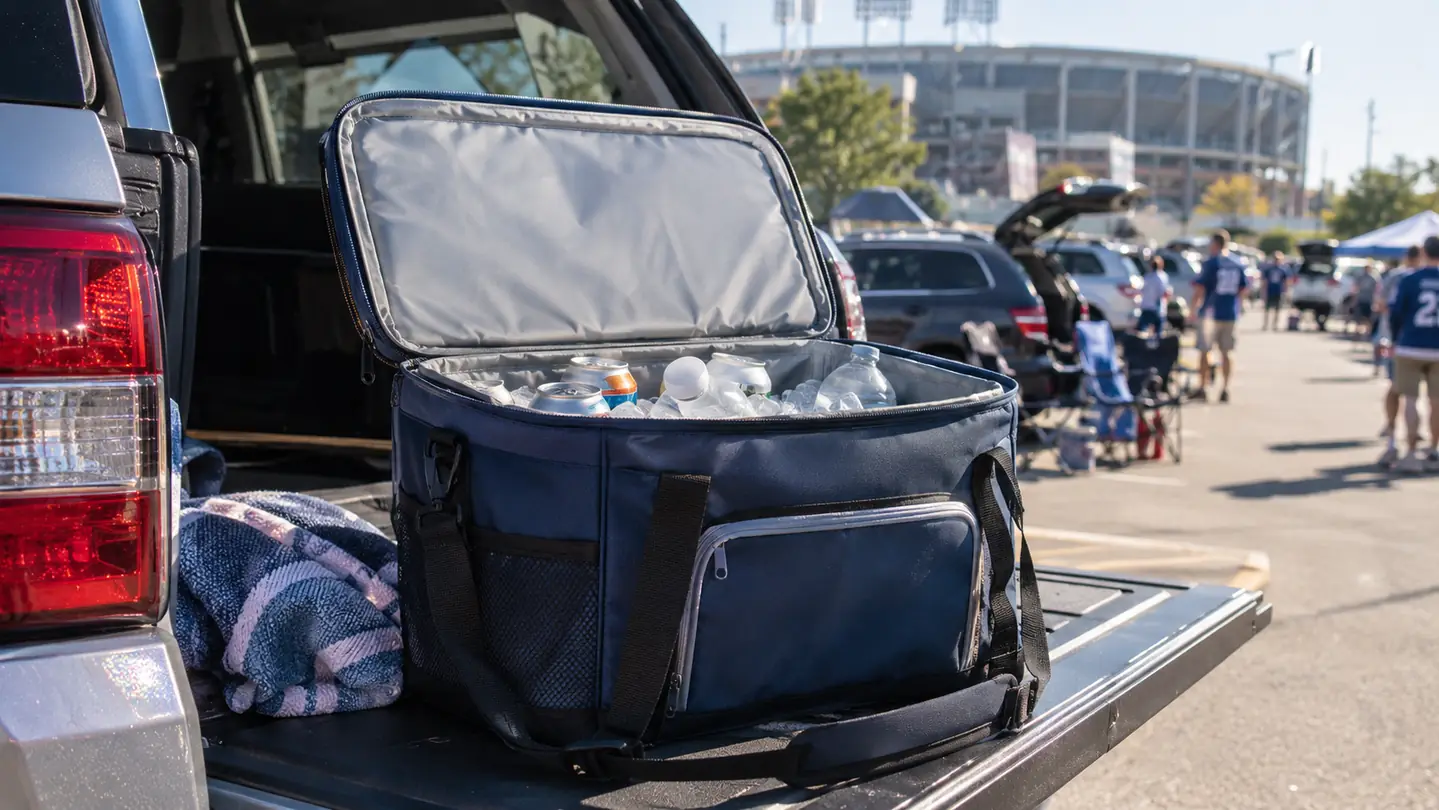
In the Tahoe the bag rides in the back, behind the second row. Not in the cargo well up under the rear glass, where the sun turns that space into an oven by mid morning. I found that out the hard way on a September drive, when I set the bag under the glass at a rest stop and came back twenty minutes later to a sweating bag and a bottle that had gone lukewarm. Behind the second row it gets shade from the roof and whatever cool air drifts back from the front, and on a hot day you can feel the difference through the side of the bag.
I keep a towel under it. The bag sweats on the outside when the day is humid, and a towel keeps that off the carpet. On a really hot drive I throw another towel over the top. It also keeps the bag from sliding around when Renee has the seat back and the truck is working through a construction zone. Shade is the cheapest cooling there is and it costs you nothing but a towel you already own.
And when we stop to eat on the road, the bag comes inside with us, or the truck stays running with the air on while one of us runs in. I know that sounds fussy. A soft bag sitting in a closed vehicle in Louisiana in September will not be cold when you come back to it, no matter how well you packed it.
Step 5: Open it once at the parking lot, then leave it be
Everything in that bag is cold because the top is closed. Every time you open it you trade the cold air inside for the warm air outside, and the bag does not earn that back. So at the tailgate I pull out what we need in one pass. The food, the drinks for the next hour, the water. Then the top goes back down and stays down.
The rest of it stays in the Tahoe, locked, for the walk back after the game. The cooler never goes past the parking lot. It does not go to the gate and it does not need to. Before you leave home, check the stadium's own website for what it lets through the gate. Many pro stadiums publish a clear bag rule, and 12 by 6 by 12 inches is a size a lot of them list. Rules differ from stadium to stadium and they change, so their site is the only source worth trusting on it.
Back home, empty what is left, tip out the meltwater, wipe the liner, and leave the bag open on the shelf in the hall closet to dry. That is four minutes of work. It is also the reason a 38 month old bag does not smell like a cooler. The one time I skipped it, I paid for it on the next trip.
Thirty-eight months, about twenty road trips, one 30-liter bag, and it is still the thing that comes off the closet shelf.
What Else Helps
A few small things that cost nothing and pull more weight than they should.
Keep the shoulder strap on the bag. It ships with the bag and the shoulder straps, and when you are hauling 30 liters of drinks and food from the truck to a tailgate spot, one strap across your body beats two hands on the sides. I also keep a folded trash bag in one of the mesh pockets for empties, because a parking lot with no trash can is the normal case, not the exception.
Set the bag in the shade of the truck at the tailgate instead of on the sunny side, and put it back in the Tahoe before you walk to the gate, not after. I watched a guy two spots down leave his sitting out in full sun while he walked a lap around the lot, and he came back to a bag of warm soda. If the group is bigger than two, pack a second bag rather than stacking this one past the top. A bag stuffed over the rim does not close right, and a bag that does not close right is a bag with the top open all afternoon.
Between trips, all of it lives on one shelf in the hall closet. The Lifewit folds down flat enough to sit under a stack of towels, which is the reason we stopped dragging the hard cooler to games in the first place. That hard cooler still lives in the garage for fishing. It is a good cooler and it is heavy, and it took up more of the Tahoe than two people in their sixties wanted to lift.
None of this is complicated. Chill the bag, freeze the bottles, fill the empty space, park it in the shade, and stop opening it every ten minutes. Do that and the drinks are still cold when you get back to the truck, which is the only test that matters.
The bag that has made about twenty road trips and still folds flat
30 liters, 50 cans, 600D Oxford outside, PEVA liner inside, two mesh pockets and a shoulder strap. It rides behind the second row and goes back on the closet shelf between games.
Amazon Check Today's Price on Amazon →