
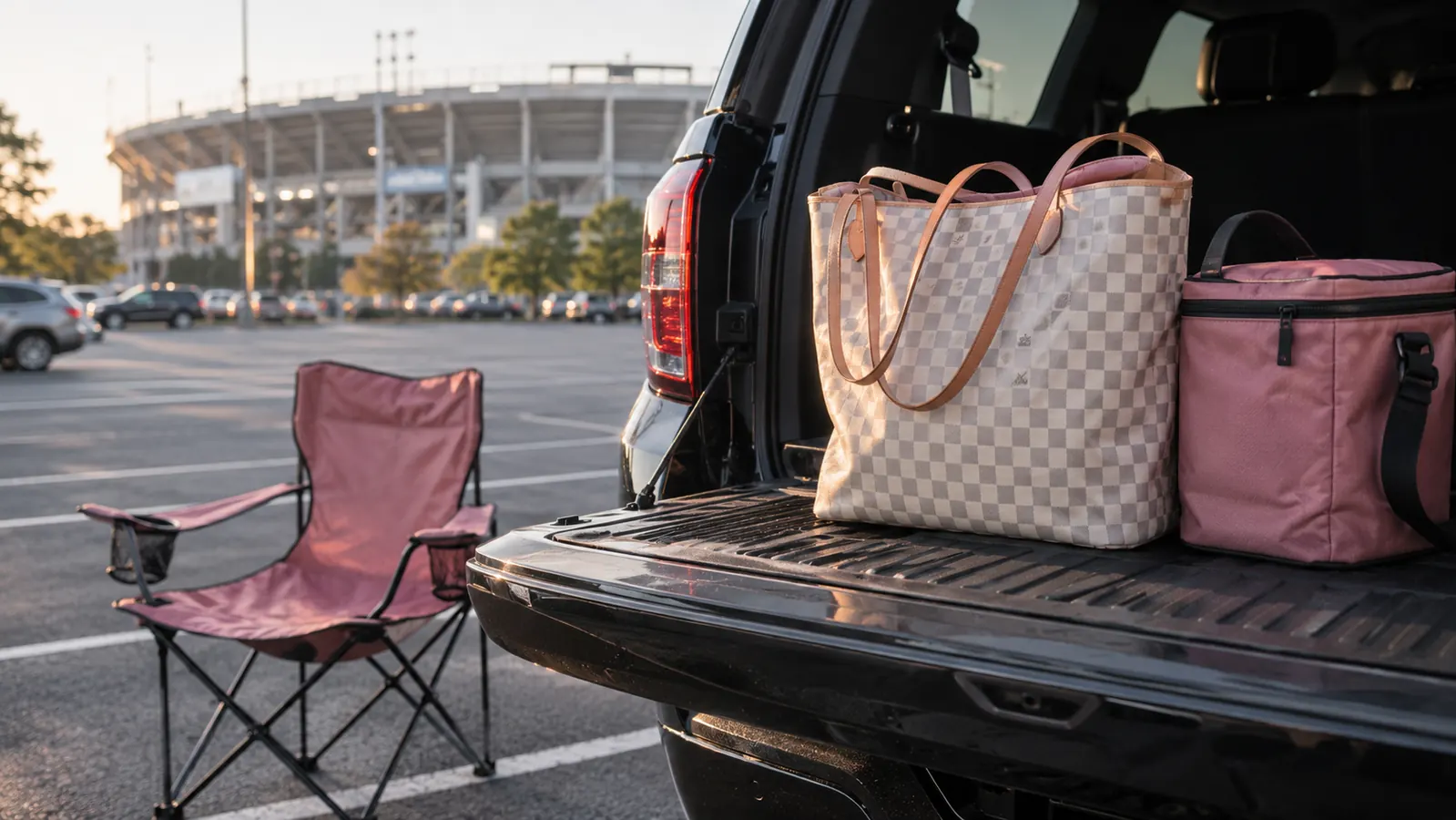
The bag is the part of game day nobody plans. You plan the drive. You plan where to park and how early to leave so you are not standing in a line that wraps around a corner. Then you get to the gate and find out the bag you brought is the wrong size, or the wrong material, or has a pocket the guard wants to look inside of while forty people wait behind you. Ten minutes of thinking at the kitchen table fixes all of that.
I am not going to tell you a bag makes or breaks a Saturday, because it does not. What a bag decides is whether the last ten minutes before you get inside are easy or irritating. We carry a BAGAIL clear tote, the 12 by 6 by 12 inch one, and it has been to about 18 games. Renee carries it, since it is one bag and we share it. Inside goes a power bank, two phones, a wallet, keys, a small pack of tissues and a rain poncho. That is the whole load. Here is the order I pack it in and the reason behind each step, starting with the one step that is not about packing at all.
One tote, 12 by 6 by 12 inches, and about 18 games on it
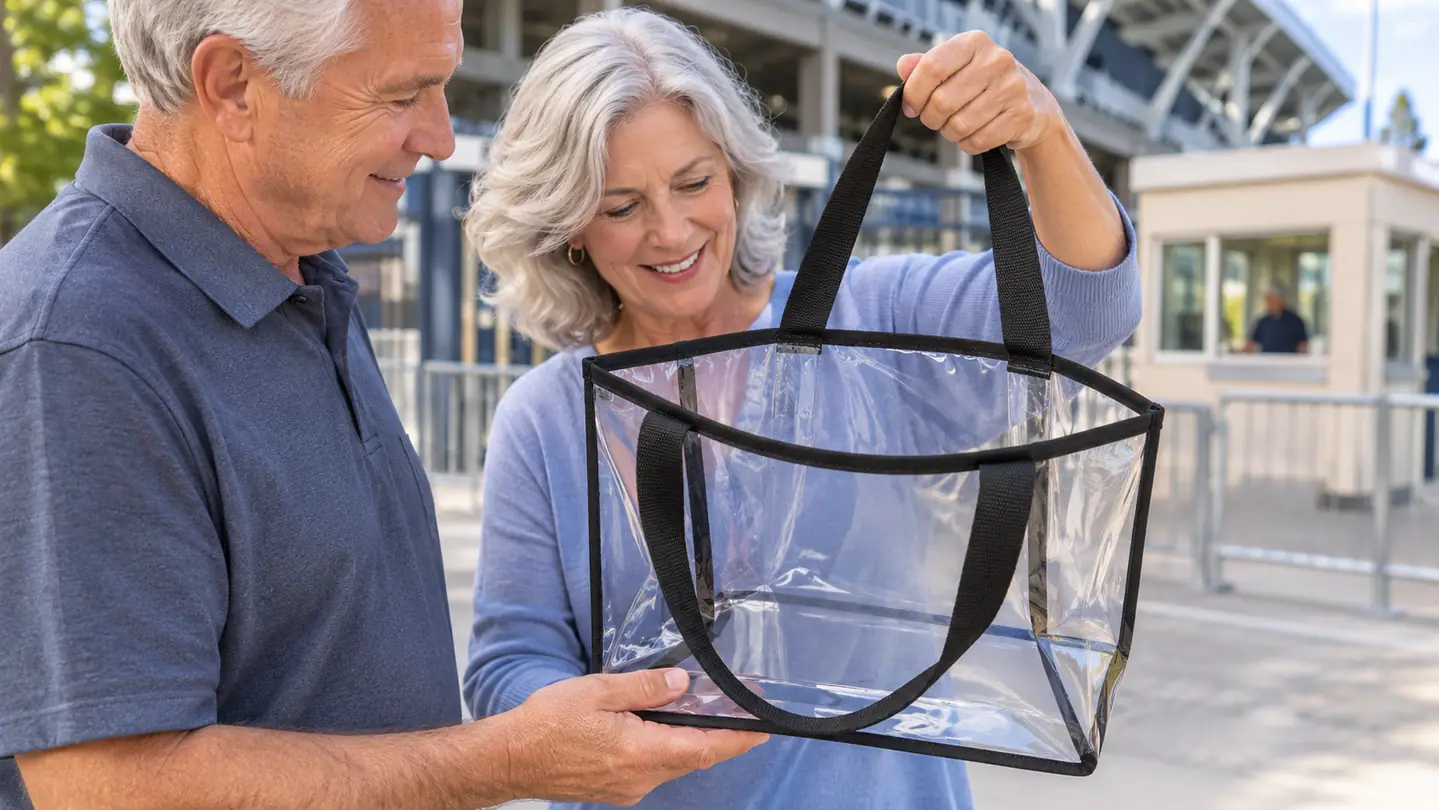
The BAGAIL clear tote is 13.5 liters and 7.84 ounces, with a zipper top and an adjustable shoulder strap. Read your stadium's bag rule before you order anything, including this.
Amazon Check Today's Price on Amazon →Step 1: Read the Stadium's Bag Rule Before You Pack Anything
This step happens at the kitchen table, not at the gate. Every stadium publishes its own bag rule, those rules differ from one place to the next, and they change from season to season. What was fine in September is not always fine in December. So before I load a single item, I pull up that stadium's website and read the bag section myself.
Three things I am looking for. The size limit, the material, and whether a seat with a back is allowed. Many of the pro stadiums we have been to publish a limit close to 12 by 6 by 12 inches, and that is the size our tote is. Many is the word I want you to hear. Not all. I have read a rule written a different way, and I have read a rule that had changed at a place we had already been to twice. That is why the bag sits on the shelf between trips and gets checked every time instead of assumed.
The seat line matters as much as the bag line for us, because we own two folding stadium seats and they do not leave the truck if that stadium says no back. A flat cushion is allowed some places where a seat with a back is not, and there is no pattern to it that I have been able to work out. If the rule is not published or I cannot find it, I ask at the gate on the way in and I am ready to walk something back to the Tahoe. I have never had to. I am ready anyway.
Step 2: Lay the Flat Things Against the Walls First
The BAGAIL tote is 13.5 liters and 12 inches tall, with one main compartment and a zipper across the top. There is not much to organize with, so the organizing is all in the order you set things down. Drop a wallet in first and everything else lands on top of it, and now you are digging at the gate with a line behind you.
So the flat items go around the outside. The rain poncho folds to about the size of a paperback and lies against one wall, and it stays in the bag all season whether the forecast mentions rain or not. Tissues go flat against another wall. The wallet goes in standing up rather than lying down, so it can be pinched out with two fingers while the bag is still on Renee's shoulder.
What is left is a well in the middle, and the well is where the phones, the keys and eventually the power bank go. The goal is that nothing has to be moved aside to reach anything else. Every item has a spot, and the spot is the same on every trip, so nobody has to think about it in a crowd. That is the whole system. It takes about a minute once you have done it twice.
Step 3: Pack the Phone and the Power Bank Last, and Charge Both the Night Before
Fifteen months ago my phone died in the parking lot about forty minutes before kickoff with both digital tickets on it. Renee's phone still had enough battery. She got the tickets moved over to hers and we got in a little late and missed nothing but the anthem. That is the whole story, and it is enough of a story that I have not repeated it since.
The fix was a power bank, 20,000 mAh, bought the week after. On a game day each phone gets topped off once, sometimes twice. The power bank itself gets recharged the night before every trip, and that is the part that actually matters. A battery at half charge is a heavy brick in a bag. Charge it at home, not in the lot, and not in the car on the way.
It rides in the center console of the Tahoe for the drive and moves into the tote in the parking lot. It will not fit in a small pocket, so I do not pretend otherwise. When we fly it goes in the carry-on and never in checked luggage, and I read the airline's rule on it before we leave, the same way I read the stadium's rule before we drive. Two different sets of people, two different sets of rules, same ten minutes of looking it up.
Step 4: Keep the Top Third Loose So It Opens in One Motion
Here is what the gate looks like from your side. You step up, the guard asks you to open the bag, you unzip it, they look in. Ten seconds if the bag is packed right. A minute and a half if it is stuffed and they have to ask you to take things out so they can see the bottom.
A clear bag does a lot of that work before you even unzip, because the sides show what is inside. That is the entire reason to carry a clear tote instead of a canvas one, and it is the reason the rules ask for clear in the first place. But being able to see in does not help if what they see is a pile. So I keep the top third of the bag loose. The poncho, the tissues and the wallet sit down low and out of the way, and nothing is stacked above the zipper line.
One more thing, and this is about the seats. The folding stadium seats we use have a storage pocket on the back, and nothing goes in it on the way in. The guard will want to look inside it, and I would rather they not have to ask me twice. It stays empty at the gate and it fills up once we are at our row. Small habit, saves a small hassle.
Ten seconds at the gate if the bag is packed right. A minute and a half if it is stuffed and the guard has to ask you to pull things out.
Step 5: Pack for the Walk Back, Not Just the Walk In
Everything above is about getting inside. The other half of the day is the walk back to the truck, which happens after the game in the dark, in a crowd, with a lot more people moving in a lot fewer directions than there were on the way in.
So the bag gets packed on the assumption that we will both be tired. The keys live in one spot all day and never get moved to a different pocket at halftime. The power bank goes back in after the last phone top off, so we have a light if the lot is badly lit. The tissues are there because somebody near us always needs one, and it costs nothing to be the person who has them.
And I carry nothing in my hands on that walk. That rule came out of a giveaway tote 27 months ago, a vinyl one from a hardware store, where the handle seam tore on the walk from the parking lot and we carried everything in our hands the rest of the day. A bag with a strap over the shoulder leaves both hands free for a rail, a stairway, or a door. It is a small thing that only feels small until you need it.
What Else Helps
Two more things are worth putting in the routine, and neither one is about the bag itself.
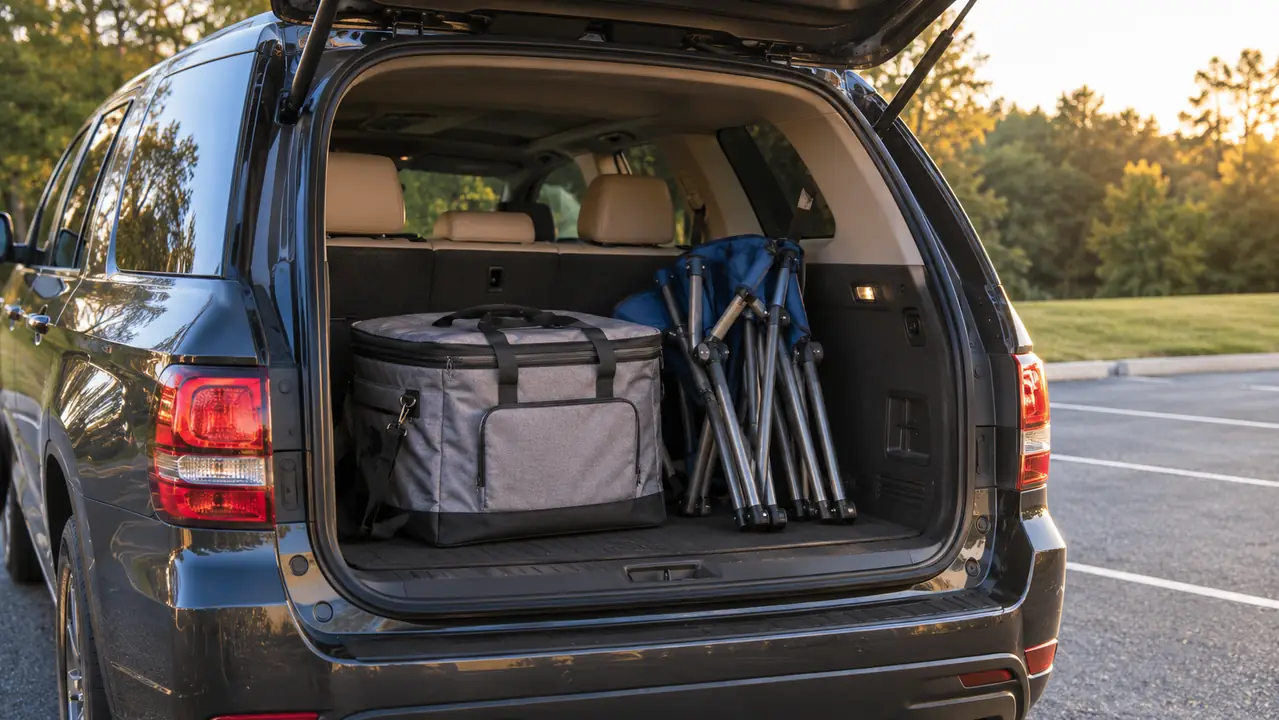
The first is a cooler that never leaves the truck. Ours is a collapsible one, 50 can size, packed the night before with frozen water bottles and ice packs. Sandwiches, fruit, water, soft drinks. It holds cold through the drive and through a tailgate and it stays in the back of the Tahoe the entire day. Not once has it gone past the parking lot, and that is deliberate. A cooler at the gate is a problem you built yourself.
The second is a note on your phone with the stadium name and the two sentences from its bag rule copied in. I started that after the second time I could not remember whether a place allowed a seat with a back. It takes a minute and it has saved me a walk back to the truck more than once. Rules change, and a note from last season tells you what was true last season.
And the last piece of advice is the least interesting one. Wipe the bag down with a damp cloth when you get home, before it goes back on the shelf in the hall closet. The one we have is PVC, a wipe takes about thirty seconds, and it keeps the thing from looking cloudy after a couple of seasons. Do it at the end of the trip and the bag is ready when you grab it at the start of the next one, which is always the moment you are already running late.
12 by 6 by 12, zipper top, and a strap that stays on your shoulder
The BAGAIL clear tote is 13.5 liters, 7.84 ounces, and wipes clean with a damp cloth. Check the bag rule for your stadium first. Then check today's price.
Amazon Check Today's Price on Amazon →